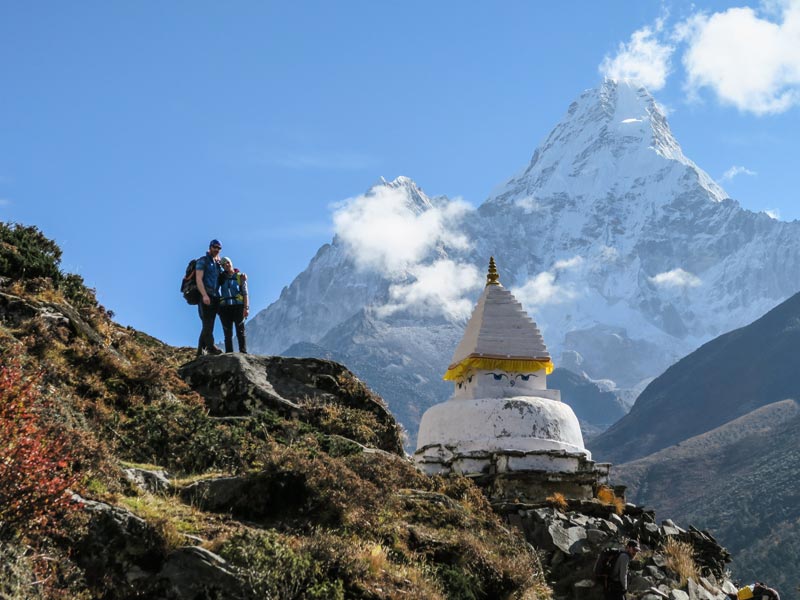
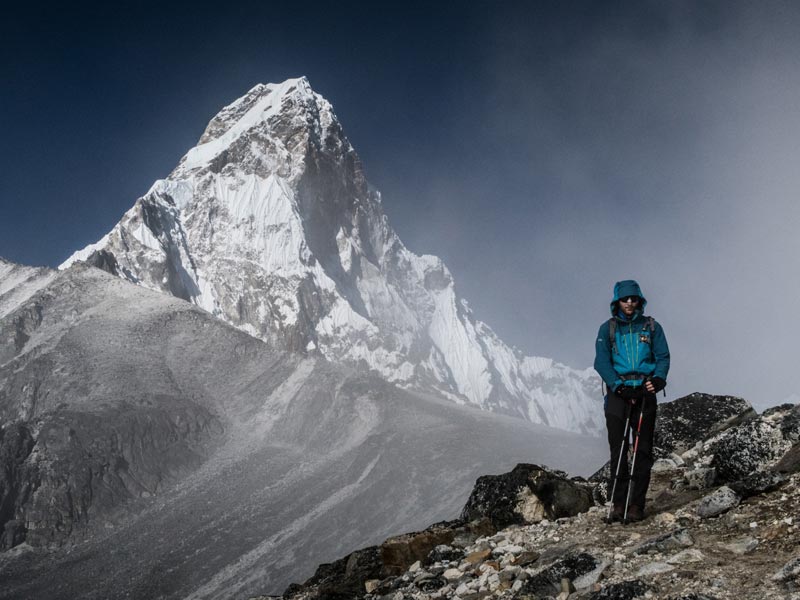
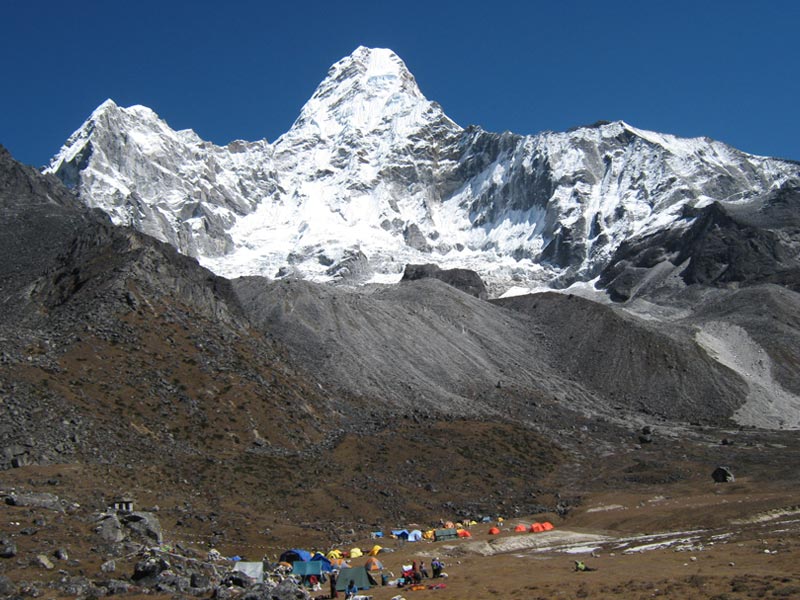
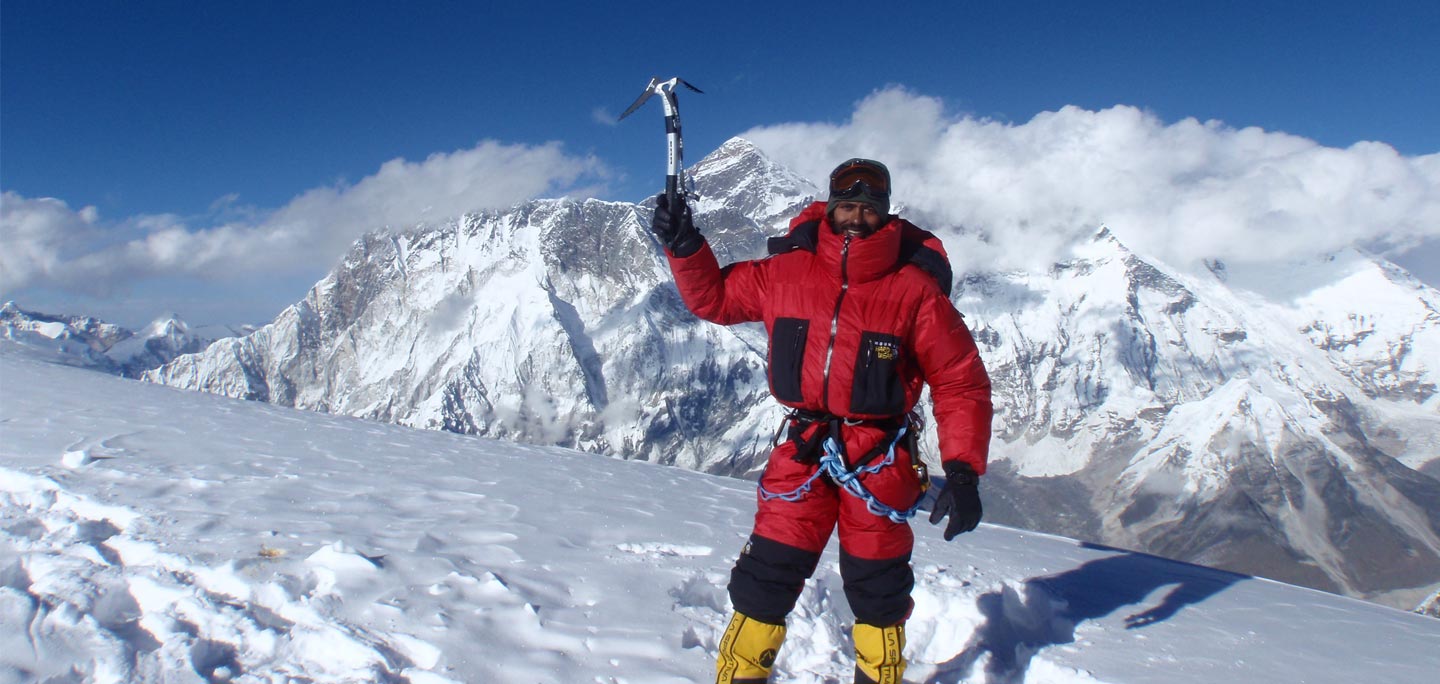
Mount Ama Dablam: Ama Dablam is located in the Khumbu region of eastern Nepal, within the Sagarmatha National Park. Situated northeast of Kathmandu and near Mount Everest, this 6,812-meters peak is part of the Mahalangur sub-range and is commonly viewed along the trail to Everest Base Camp, notably near Pangboche. The Sherpa name "Mother's Necklace" refers to Ama Dablam, a peak that stands 6,812 meters (20,349 feet) high in Nepal's Khumbu region. The glacier's hanging appearance is said to resemble a double-pendant worn by Sherpa women, while its ridges are said to represent the protective arms of a mother (ama). The Khumbu region of eastern Nepal has a mountain called Ama Dablam that lies within the Mahalangur subrange of the Himalayas. Located in the Solukhumbu District of the Koshi Province, approximately 152 kilometers northeast of Kathmandu and about 20 kilometers south of Mount Everest and Lhotse, it is only about 40 kilometers from the Tibetan border. One of the "golden" or iconic mountains, Ama Dablam (6,812m) is not suitable for complete beginners. The climb is very technical and steep, requiring solid rock, ice, and mixed-terrain mountaineering skills, despite its popularity as a low-altitude alternative to higher peaks.
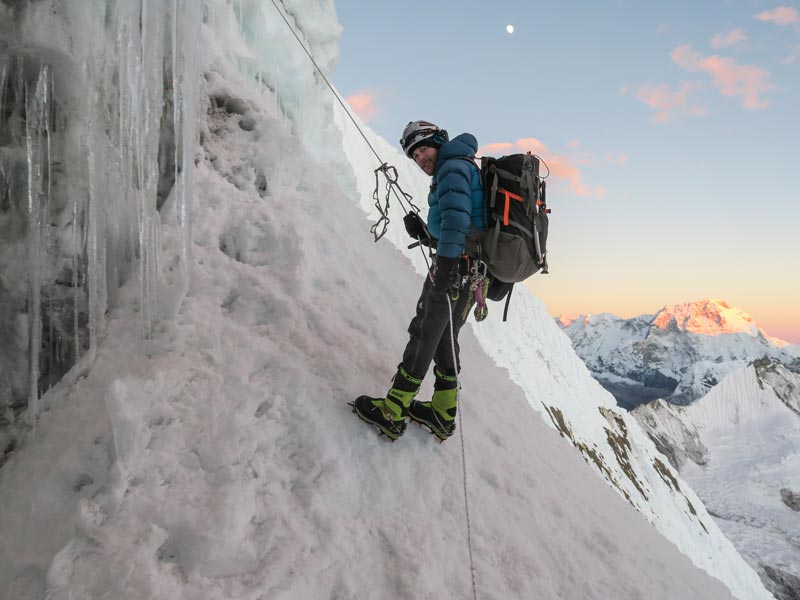
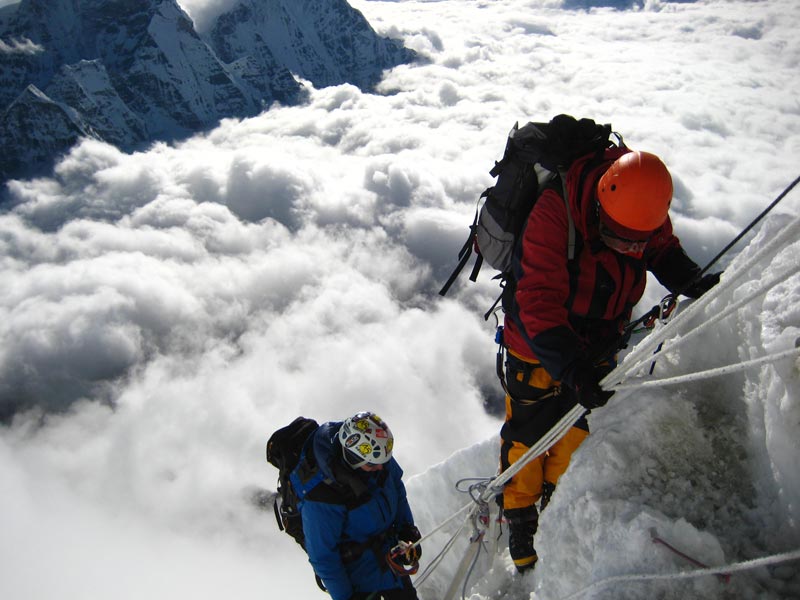
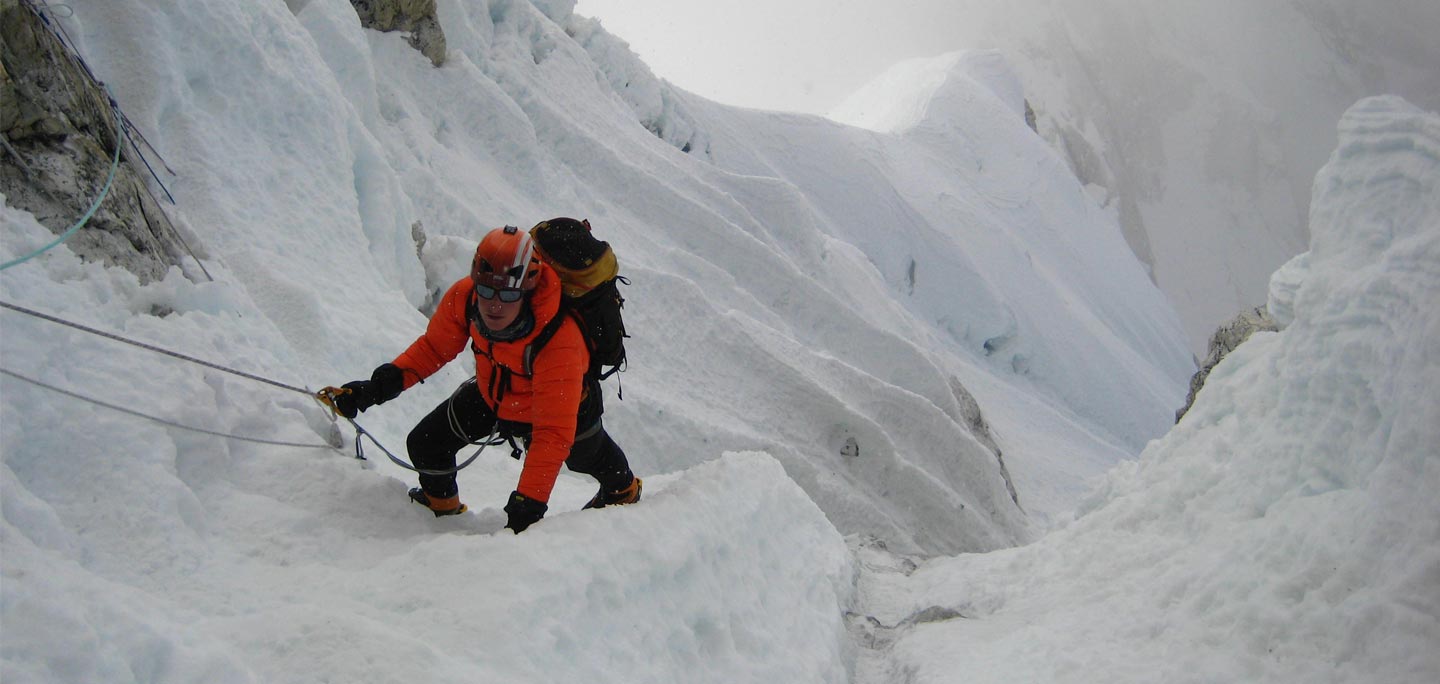
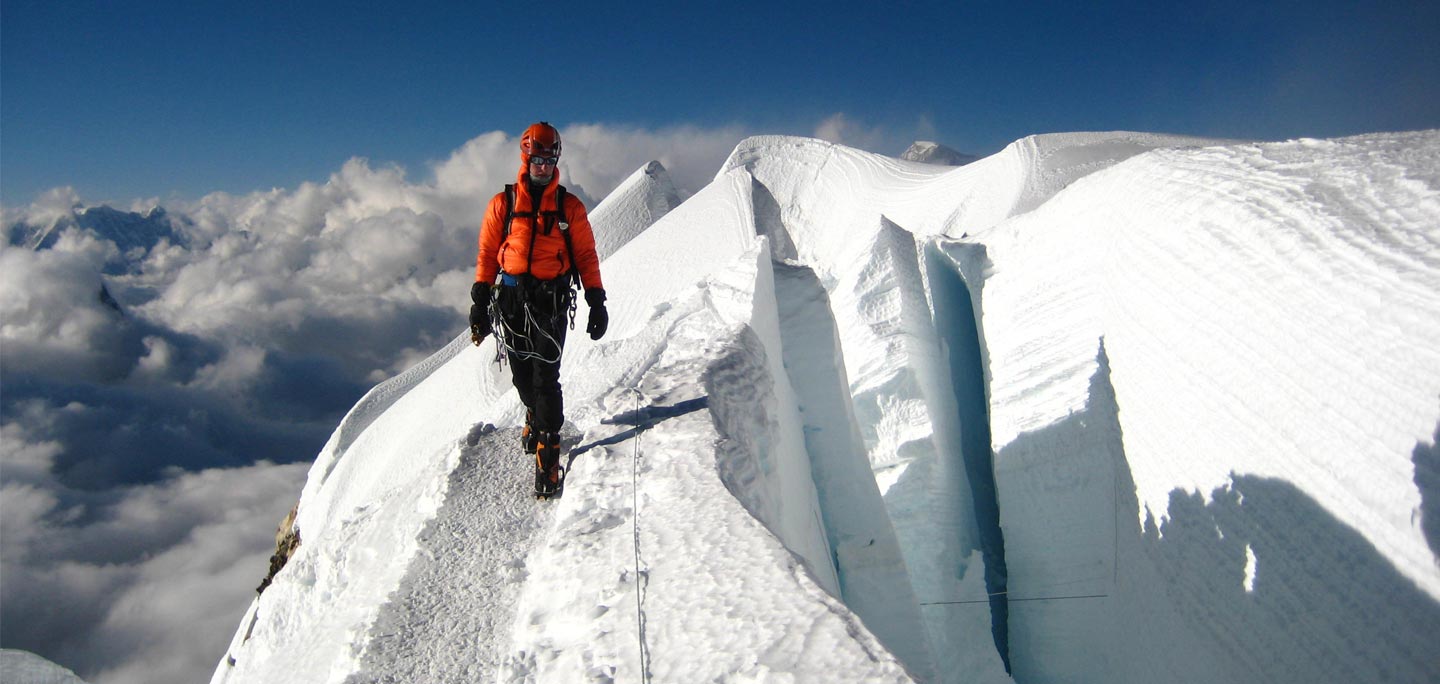
Mount Ama Dablam, one of Nepal's most popular climbing peaks, is one of the most technical and challenging peaks in the Himalayas. This mountain requires advanced rope skills on rock, ice, and snow. The steep, mixed terrain includes the Yellow Tower and the exposed Mushroom Ridge. Ama Dablam, at 6,812 meters, is not suitable for novice climbers, as it is a very technical, steep peak. A previous high-altitude experience (over 6,000m) and rock- and ice-climbing skills are required to climb Ama Dablam in Nepal. The expedition is considered the "second" or "third" serious expedition for building skills required for climbing 8,000m peaks.
It is usually recommended that climbers ascend smaller, acclimatization peaks like Island Peak (6189m, Lobuche east 6119m or Pokalde Peak 5806m) before attempting the technically challenging 6,812m Ama Dablam in Nepal as a means of gaining strength and experience before taking on the technical challenge. Altitude-dependent environments require a high degree of adaptability. This approach allows climbers to gradually adjust to higher altitudes, reducing the risk of altitude sickness. By tackling lower peaks first, they build endurance and confidence. The strategy also ensures better preparation for the technical challenges of Ama Dablam, which require advanced climbing skills and mountaineering experience at high altitudes. Before attempting the steeper and more challenging Ama Dablam, technical training and acclimatization are recommended.
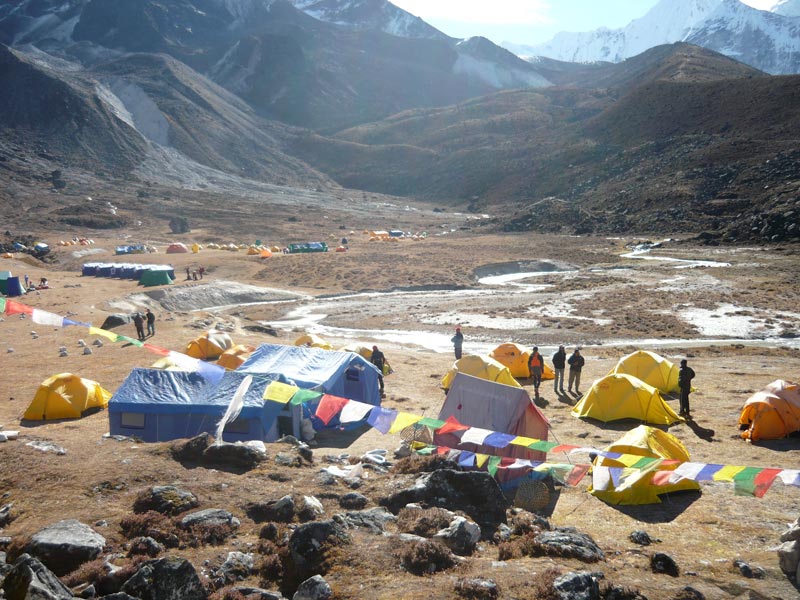
According to Sherpa tradition, the Ama Dablam represents motherly protection and is known as "Mother's Necklace". "Ama" means mother, while "Dablam" is the name of a double pendant necklace worn by Sherpa women that contains images of gods. The mountain has long ridges that look like a mother's protective arms, while its hanging glacier looks like a pendant. A relatively comfortable, sheltered place to acclimate and prepare for the technical climb of Ama Dablam, Ama Dablam Base Camp lies at 4,600 meters/15,091 feet. Besides serving as a hub for kitchen staff, logistics, and gear, the building offers a panoramic view of the Southwest Ridge.
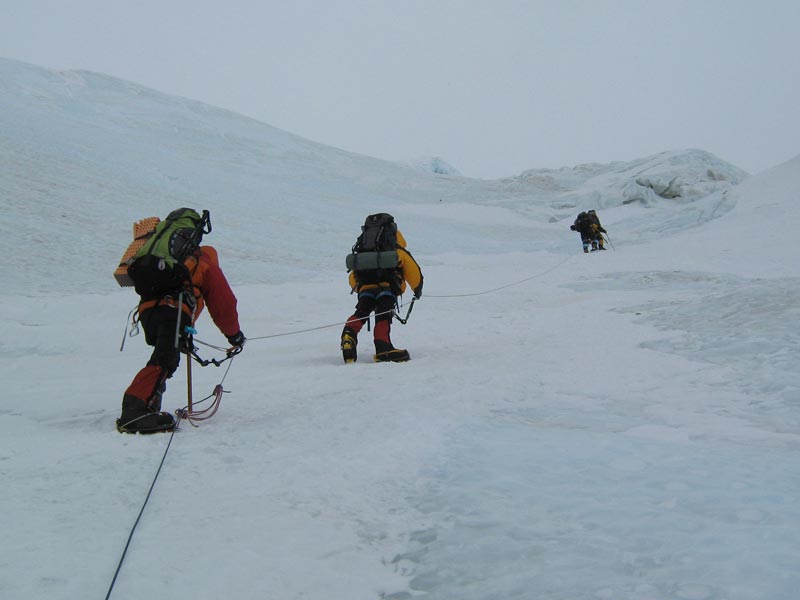
Ama Dablam climbing information: According to the normal route, Ama Dablam is normally climbed from its south-west ridge. Ama Dablam, 6812 meters, is a small snowcapped peak located in the Everest region that is usually chosen by beginners for their first climb. It is most commonly climbed along this South-West ridge that leads to the top of the Mountain Ama Dablam. As climbers cross difficult ice rocks and steep snow slopes on Mount Ama Dablam, 6812 meters, they normally pitch three high camps. To reach the first camp, climbers must pass through the toughest and most difficult saddle ridges, then climb through rocky ground and boulders.
Ama Dablam Base camp to camp 1: The walk from Ama Dablam Base Camp to Camp 1, 5,700m, climbs steeply through moraine, grassy slopes, and rock boulders, taking 5–6 hours. There is a steep, often strenuous hike requiring fixed ropes that leads to a small camp space on an exposed rocky ridge.
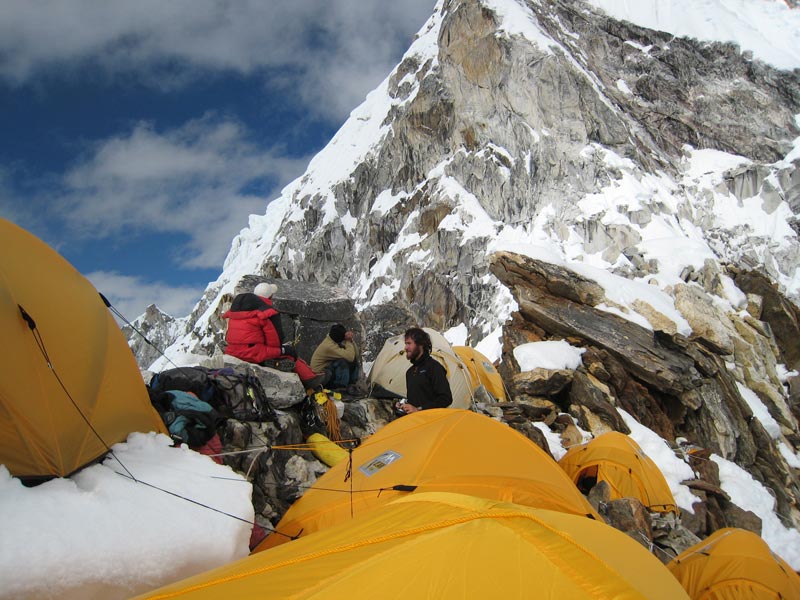
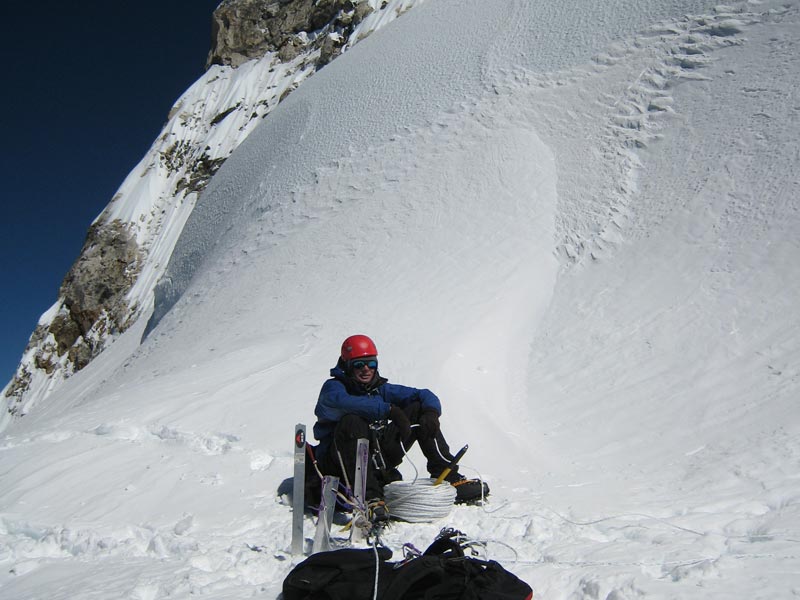
Camp 1 to Camp 2: From Ama Dablam Camp 1 to Camp 2 (the most technical, exposed, and physically challenging section of the expedition), there is a four-to-six-hour climb. Climbing steep rock ridges, negotiating granite slabs, and crossing the "Yellow Tower" are among the challenges encountered during the trek to a cramped camp perched on a rocky pillar.
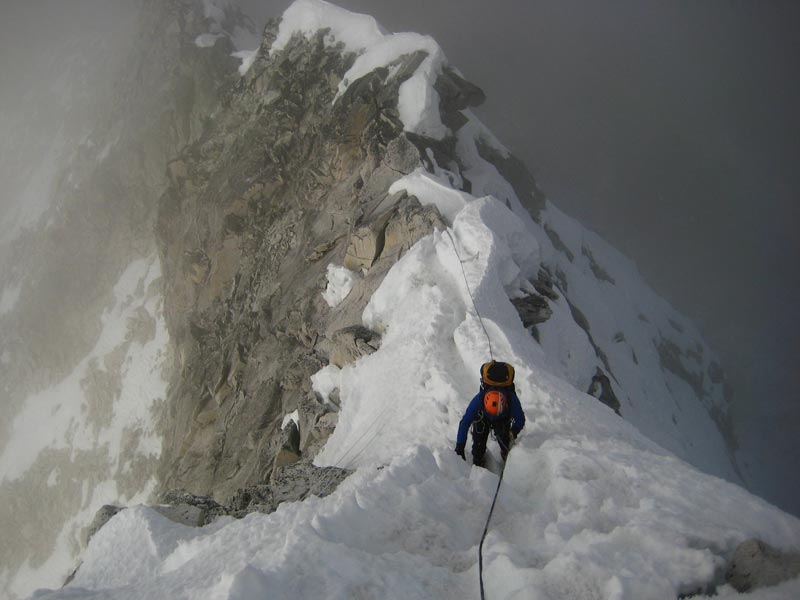
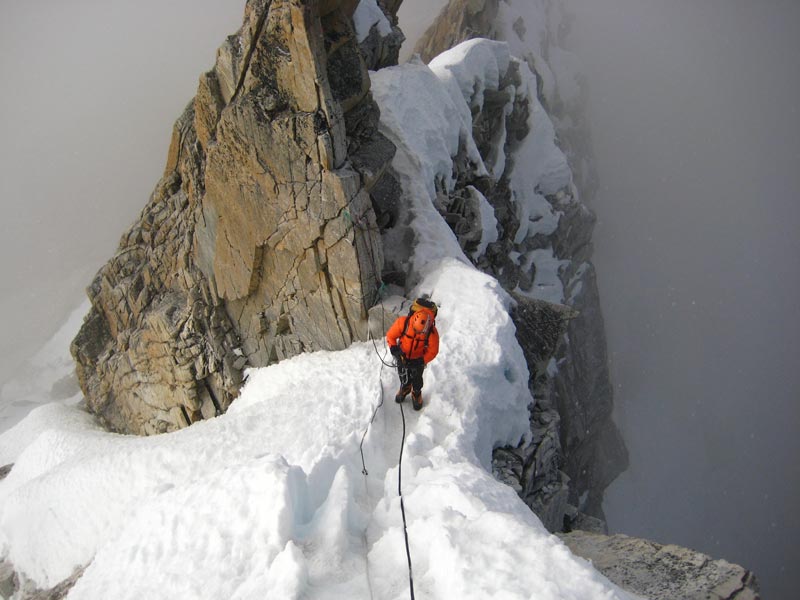
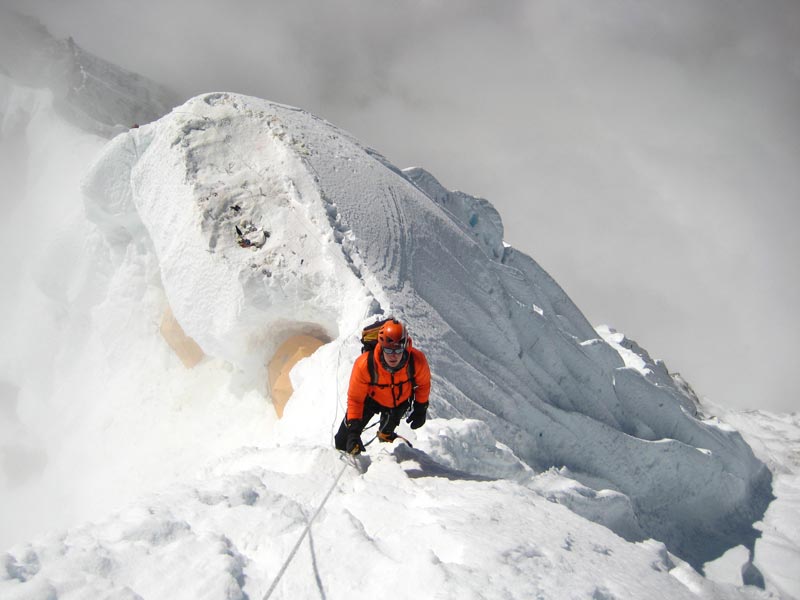
Camp 2 to camp 3: The climb from Camp 2 to Camp 3 takes 3–4 hours and is the most technical and exposed. The vertical "Grey Tower" (rock/ice mix) and the narrow, overhanging "Mushroom Ridge" must be navigated on snow and ice.
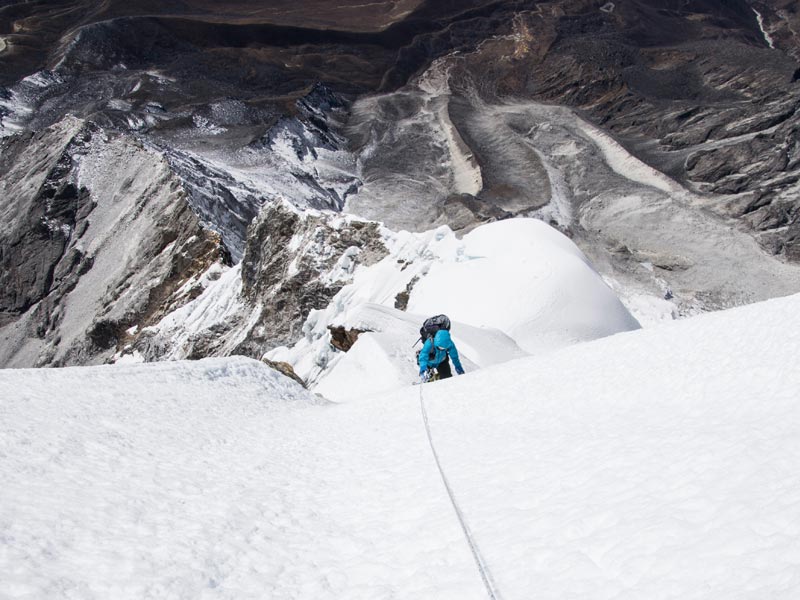
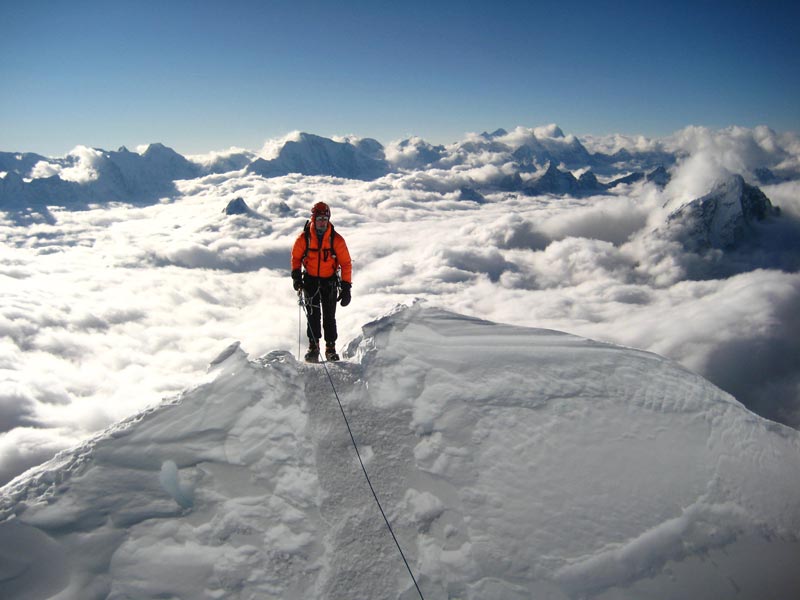
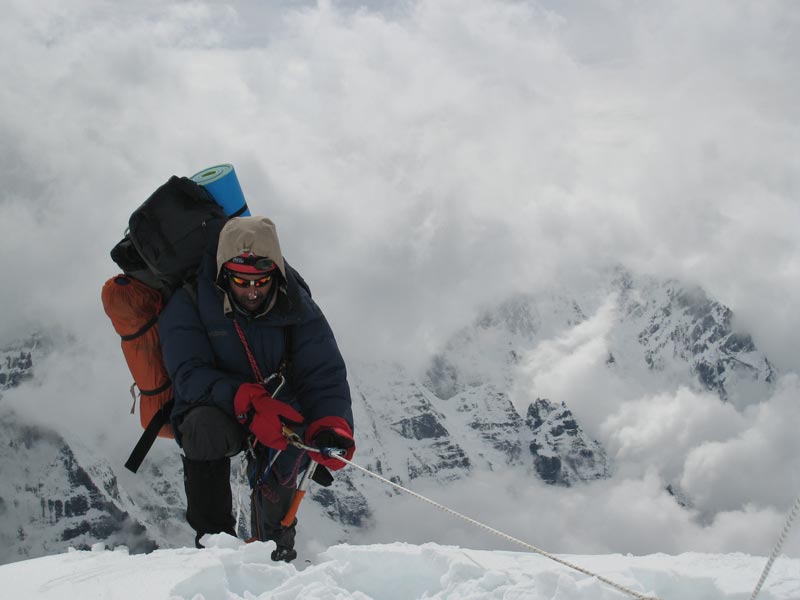
Camp 3 to Ama Dablam Summit: A climb from camp 3 to the summit of Ama Dablam is very technical, steep 45° to 70° on snow and ice, beginning around 1 or 2 AM, requiring climbers to navigate icy slopes and fixed ropes in the dark to avoid daytime avalanches.
Possible camp 2 to Ama Dablam Summit: From Camp II (approx. 6,000m) to the summit of Ama Dablam, approximately 3–5 hours of steep rock, ice, and snow await, including the 5.5-rated "Yellow Tower" and "Mushroom Ridge." There is often a stop at Camp III, which requires high-altitude experience, strong technical skills, and fixed ropes.
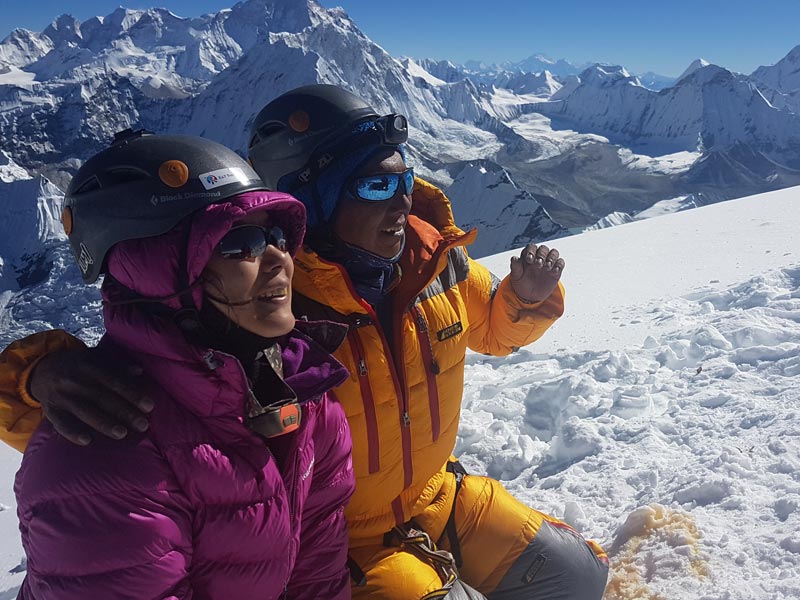
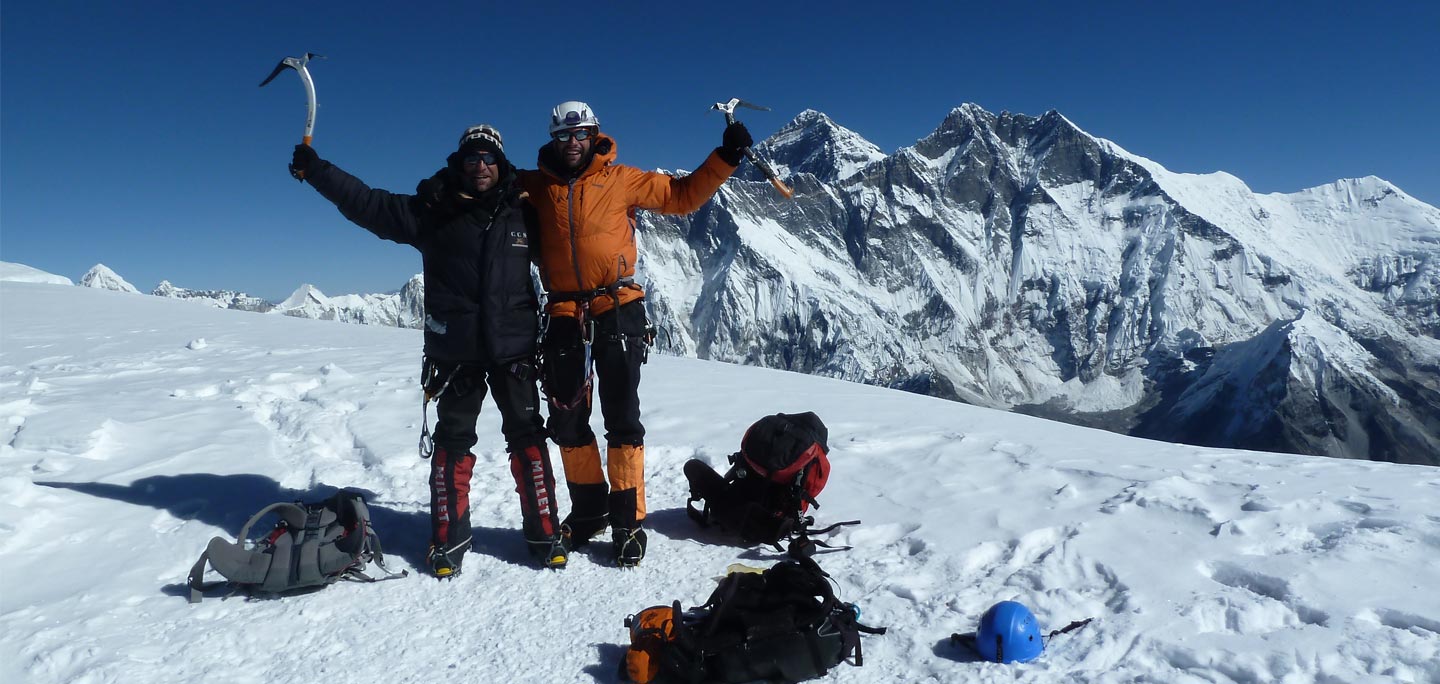
Summit from Ama Dablam: A 360-degree panoramic view of Everest, Makalu, Lhotse, and a hanging glacier, Ama Dallam, is afforded to those who reach the summit at dawn. Direct flights from Kathmandu to Lukla are available or you can drive from Kathmandu to Ramechap and fly from Ramechap to Lukla. A world heritage site known for snow leopards and Himalayan Mountain goats (Thars) awaits at Lukla, the starting point of the trek. Climbing Island Peak and the trails to Thyanboche, Pangboche, and Chukkung. The trail returns to Chukkung, Dingboche, Pangboche, and Ama Dablam Base Camp after climbing Island Peak. Ama Dablam Base camp service: The Base Camp Only service provides essential logistics for independent climbers, including permits, accommodation with meals at Base Camp (4,600m), cooks/staff, porterage, and trekking logistics, but not above Base Camp. The service includes Lukla flights, tents, food at Base Camp, and staff insurance, enabling self-guided technical climbing.
There is a common practice of combining expeditions to Mount Island Peak 6,189m and Mount Ama Dablam 6,812m into one continuous trip. Acclimatization climbs like Island Peak are often used as a prelude to Ama Dablam's technical terrain. With the combined expedition, often lasting 30 days, participants improve their fitness and technical skills in the Himalayas.
Who summit Ama Dablam first? Known as the "Matterhorn of the Himalayas," Ama Dablam (6,812m) in Nepal's Khumbu region was first summited on March 13, 1961, by Mike Gill (NZ), Barry Bishop (USA), Mike Ward (UK), and Wally Romanes (NZ). The name "Mother's Charm Box" refers to the ridges on its surface that symbolize a mother protecting her child
How difficult to climb Ama Dablam? As one of the most difficult and technically demanding climbs in the world, Ama Dablam (6,812m) is often ranked as a TD climb (Très Difficult/Very Difficult) that is suitable for more experienced mountaineers. The climb requires mastery of vertical rock, snow, and ice, severe exposure, steep fixed-rope climbing (up to 90 degrees on the Yellow Tower), and endurance at high altitudes.
which normal route for Ama Dablam? Ama Dablam is normally accessible via the Southwest Ridge. For reaching the summit of 6,812 meters, nearly all commercial expeditions follow this route, which typically involves three high-altitude camps (C1, C2, and Camp 3 or 2.9).
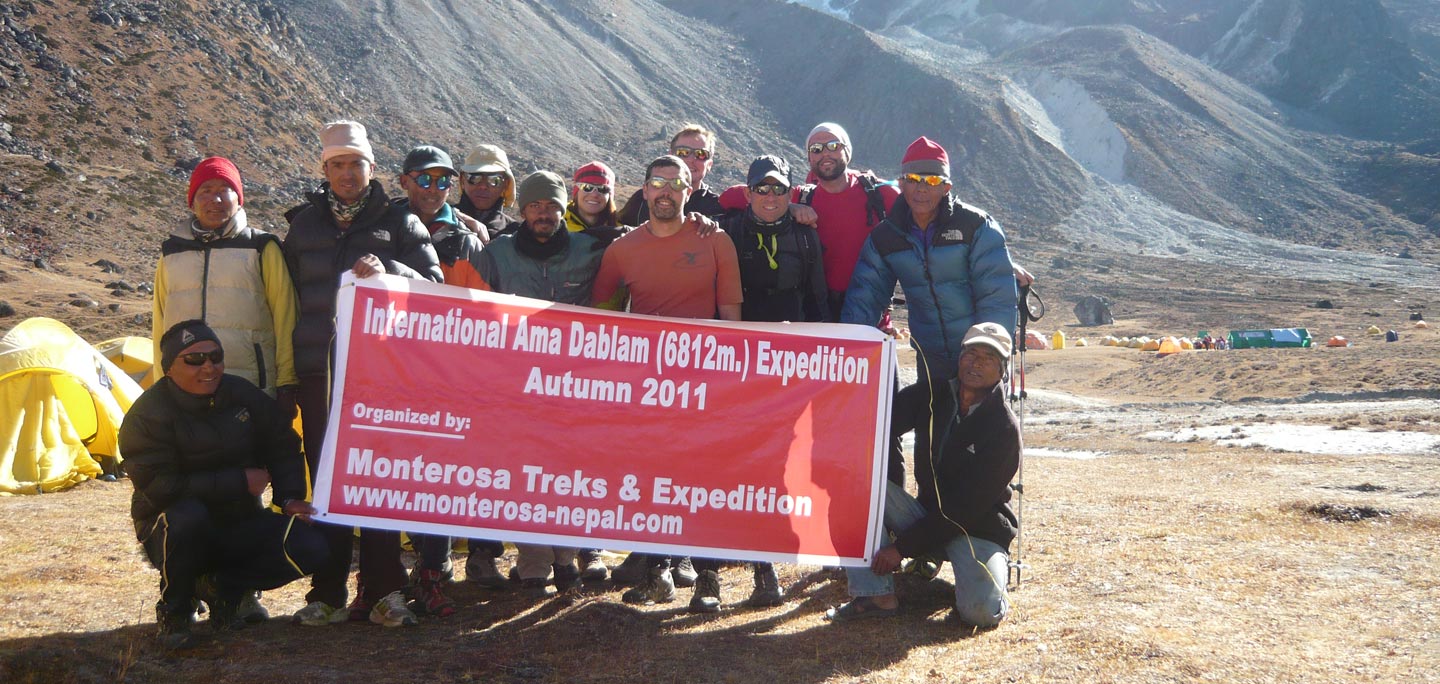
The top Nepalese expedition climbing company Monterosa Treks and Expedition Pvt Ltd has a high rate of success and strong logistics on Mount Ama Dablam in autumn 2026 and spring 2027.
Ama Dablam Expedition autumn-1, it is hard to find a local company, but Monterosa Treks and Expedition Pvt. Ltd. operate very well.
Expedition Itinerary- A
10 October 2026 Day 01: Arrival Kathmandu and transfer hotel
11 October 2026 Day 02: Preparing - expedition in Kathmandu
12 October 2026 Day 03: Briefing in the department of tourism
13 October 2026 Day 04: Fly to Lukla and trek-Phakding- lodge
14 October 2026 Day 05: Trek to Namche Bazaar 3440m.-lodge
15 October 2026 Day 06: Day hiking / acclimatization day-lodge
16 October 2026 Day 07: Trek -Thyangboche 3800m.stay lodge
17 October 2026 Day 08: Trek Thyangboche to Dingboche lodge
18 October 2026 Day 09: Trek to Island Peak BC 4970m.-camp
19 October 2026 Day 10: Climb Island-high camp 5600m.-camp
20 October 2026 Day 11: Island 6189m summit & Chukkung
21 October 2026 Day 12: Trek - Ama Dablam BC 4600m.- camp
22 Oct.- 07 Nov.2026 Day 13 - 26: Climb Ama Dablam 6812m.
08 Nov. 2026 Day 27: Trek Base camp to Namche bazaar-lodge
09 Nov. 2026 Day 28: Trek Namche bazaar to Phakding & Lukla
10 Nov. 2026 Day 29: Fly to Ramechhap, transfer to Kathmandu
11 Nov. 2026 Day 30: Transfer to KTM airport for final departure
Expedition Itinerary- B
14 October 2026 Day 01: Arrival Kathmandu and transfer hotel
15 October 2026 Day 02: Preparing - expedition in Kathmandu
16 October 2026 Day 03: Briefing in department of tourism hotel
17 October 2026 Day 04: Fly to Lukla and trek-Phakding- lodge
18 October 2026 Day 05: Trek to Namche Bazaar 3440m.-lodge
19 October 2026 Day 06: Day hiking/acclimatization day -lodge
20 October 2026 Day 07: Trek - Thyanboche 3800m. Stay lodge
21 October 2026 Day 08: Trek -Ama Dablam BC 4600m.-camp
22 Oct. - 07 Nov. 2026 Day 09 -22: Climb Ama Dablam 6812m.
08 Nov. 2026 Day 23: Trek Base camp to Namche bazaar - lodge
09 Nov. 2026 Day 24: Trek Namche bazaar to Phakding & Lukla
10 Nov. 2026 Day 25: Fly to Ramechap & transfer to Kathmandu
11 Nov. 2026 Day 26: Transfer to KTM airport for final departure
Expedition Cost: (Group joining basis)
Trekking + Island Peak + Ama Dablam
Per Person USD 4000 (Trekking + Island Peak + Ama Dablam)
Per Person USD 3500 (Trekking + Ama Dablam)