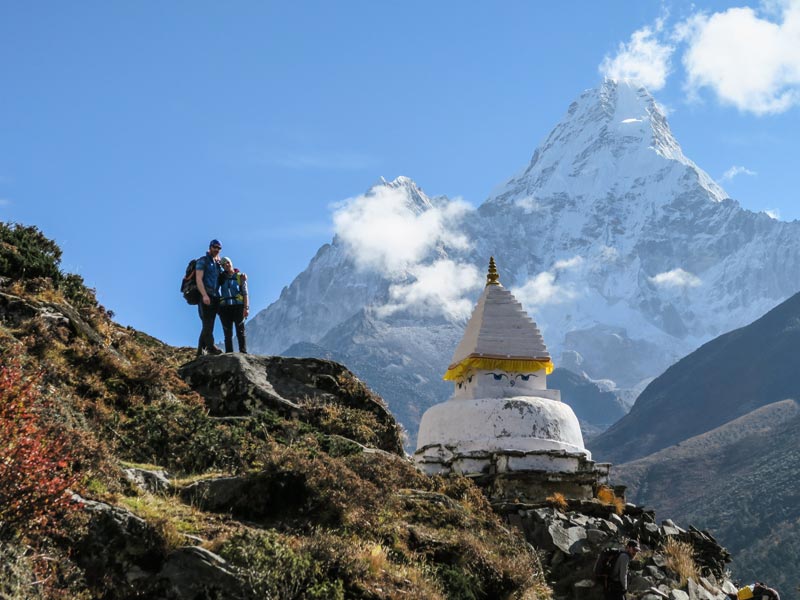
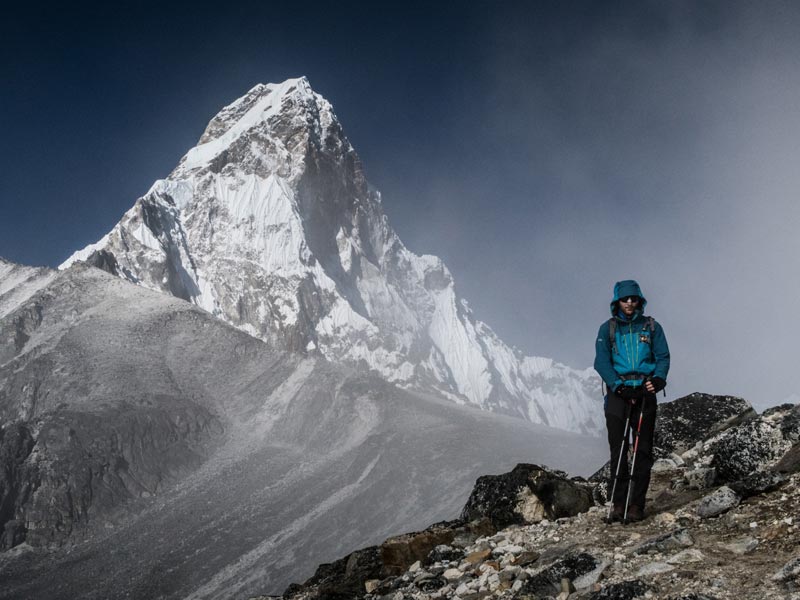
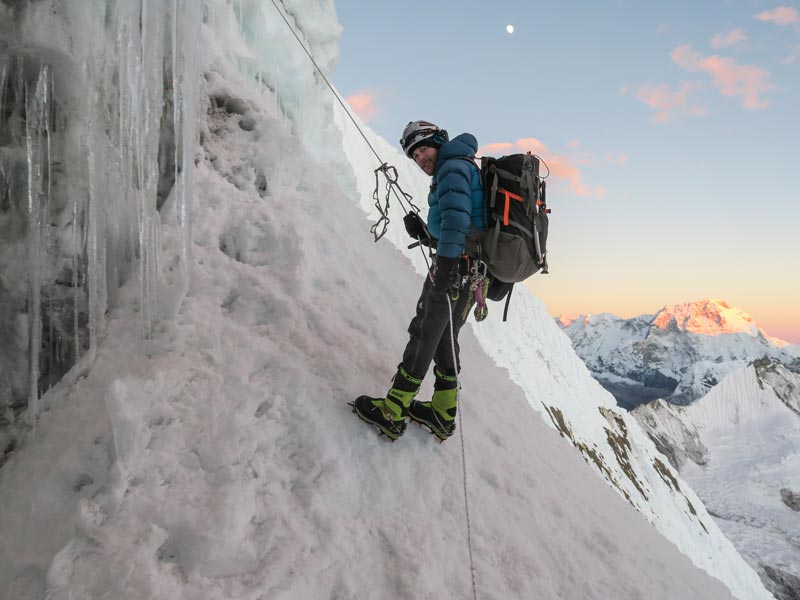
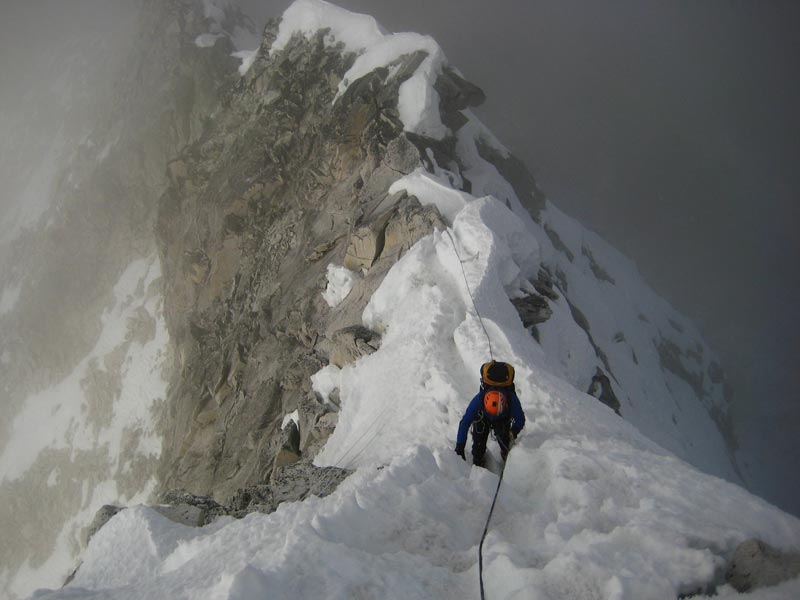
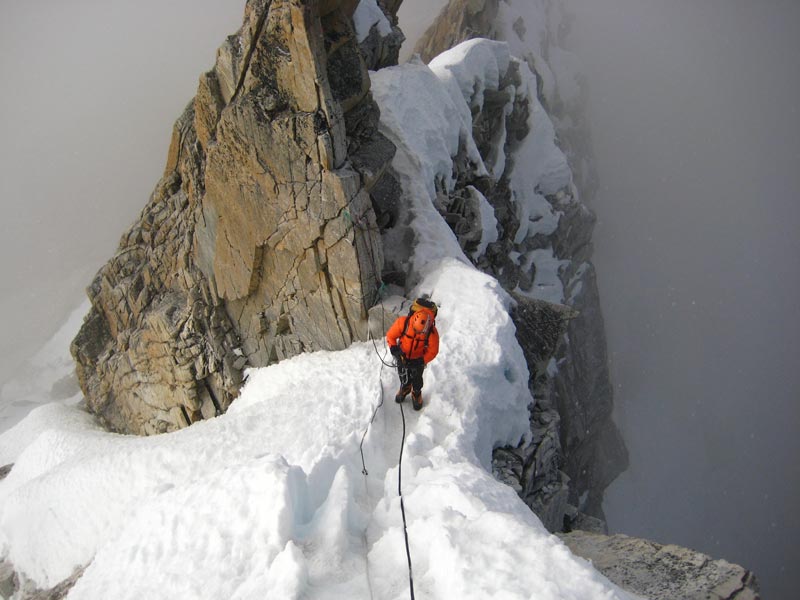
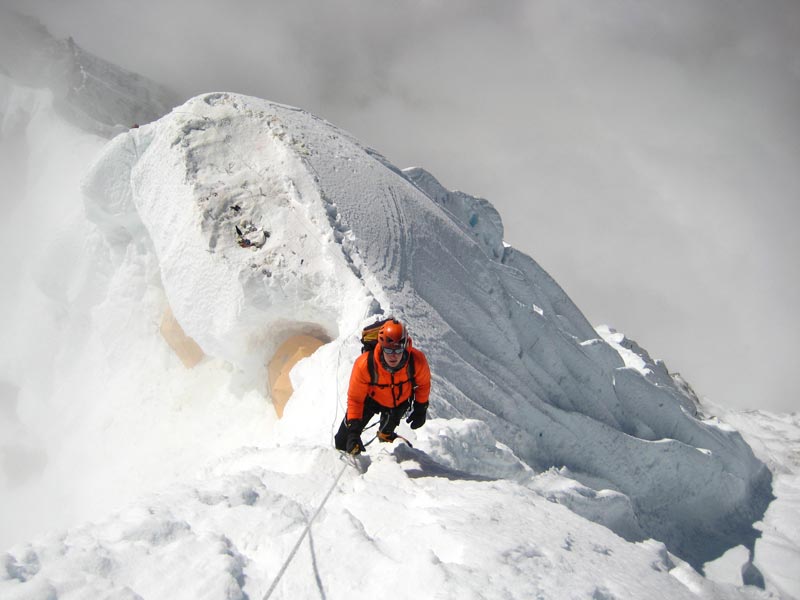
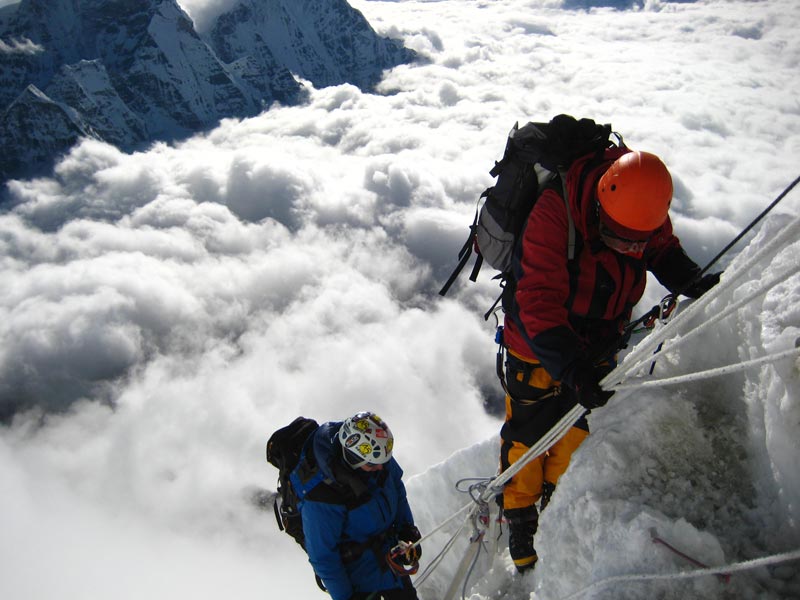
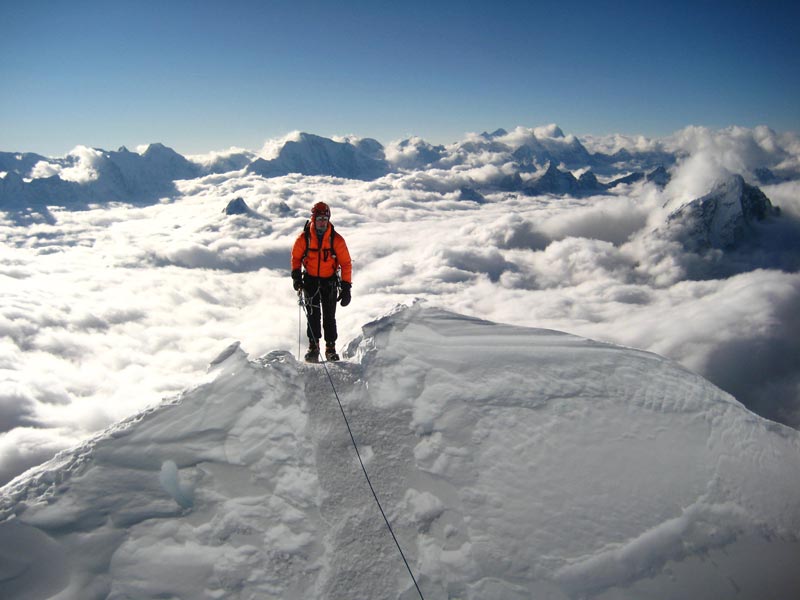
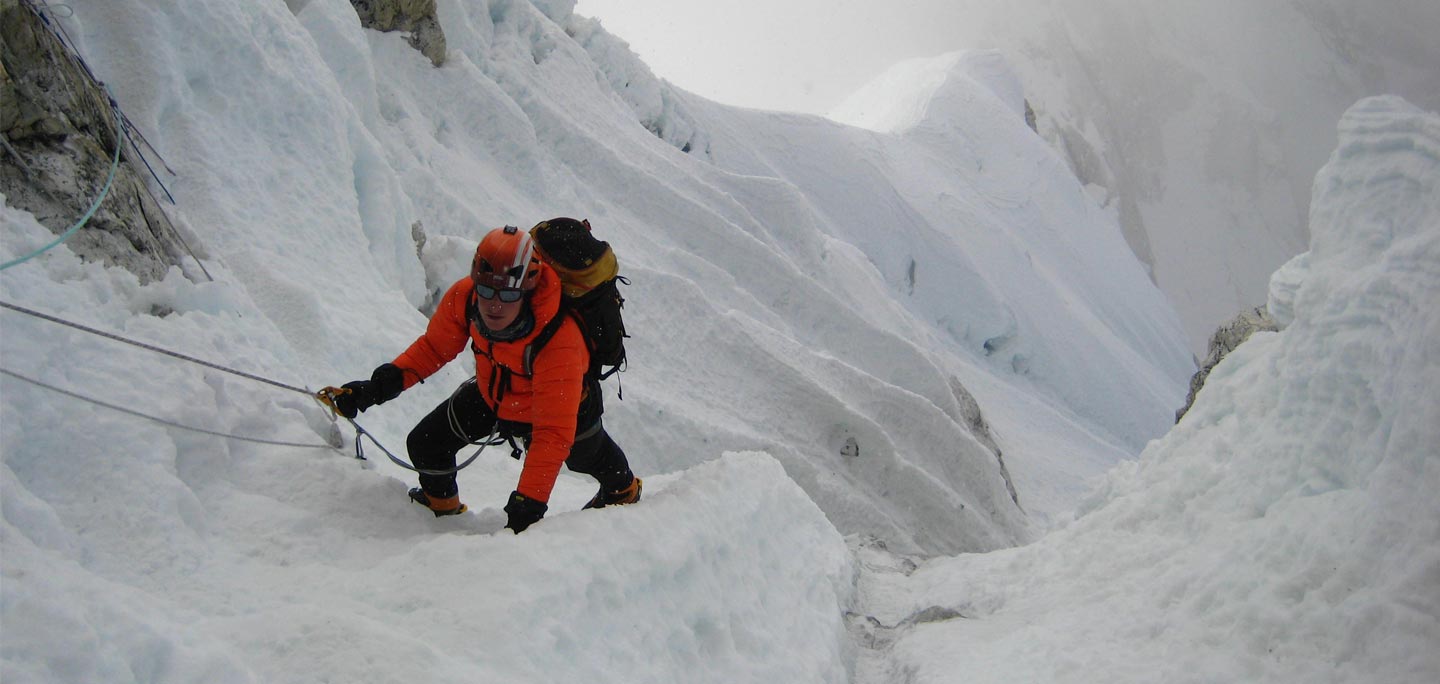
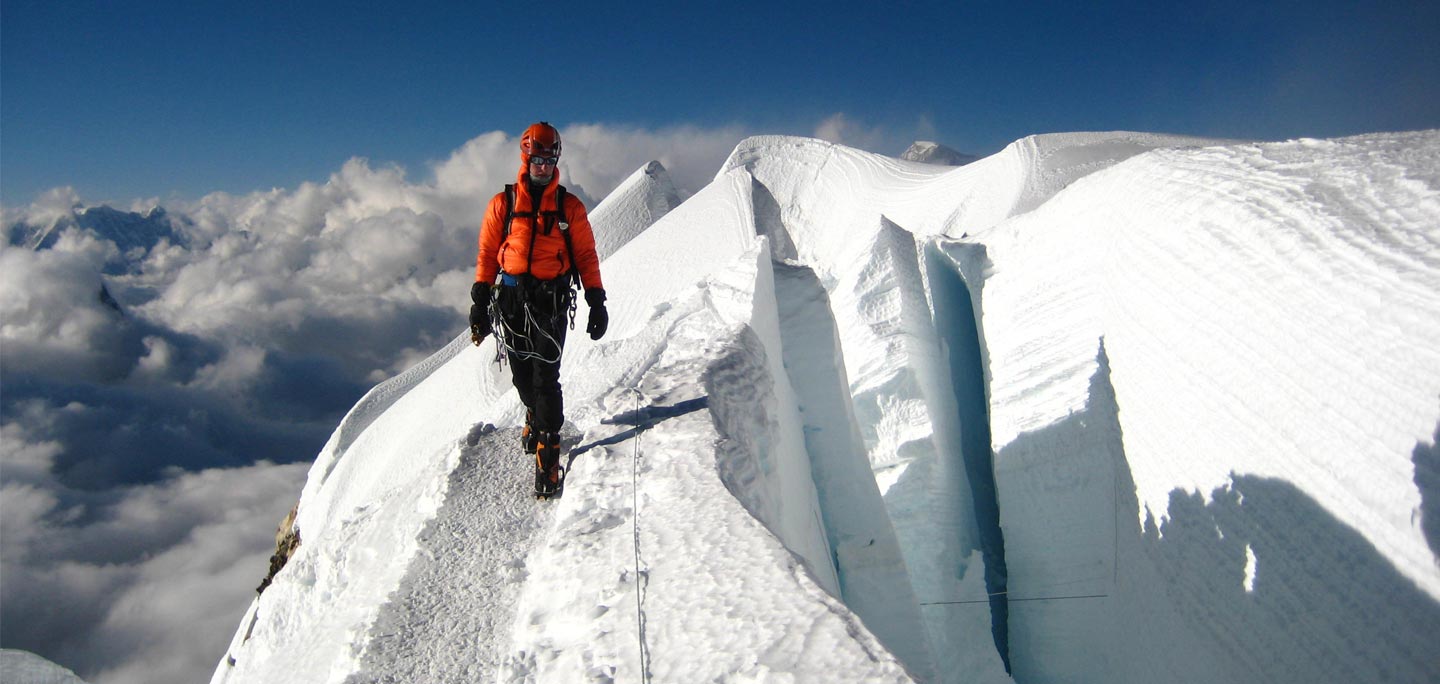
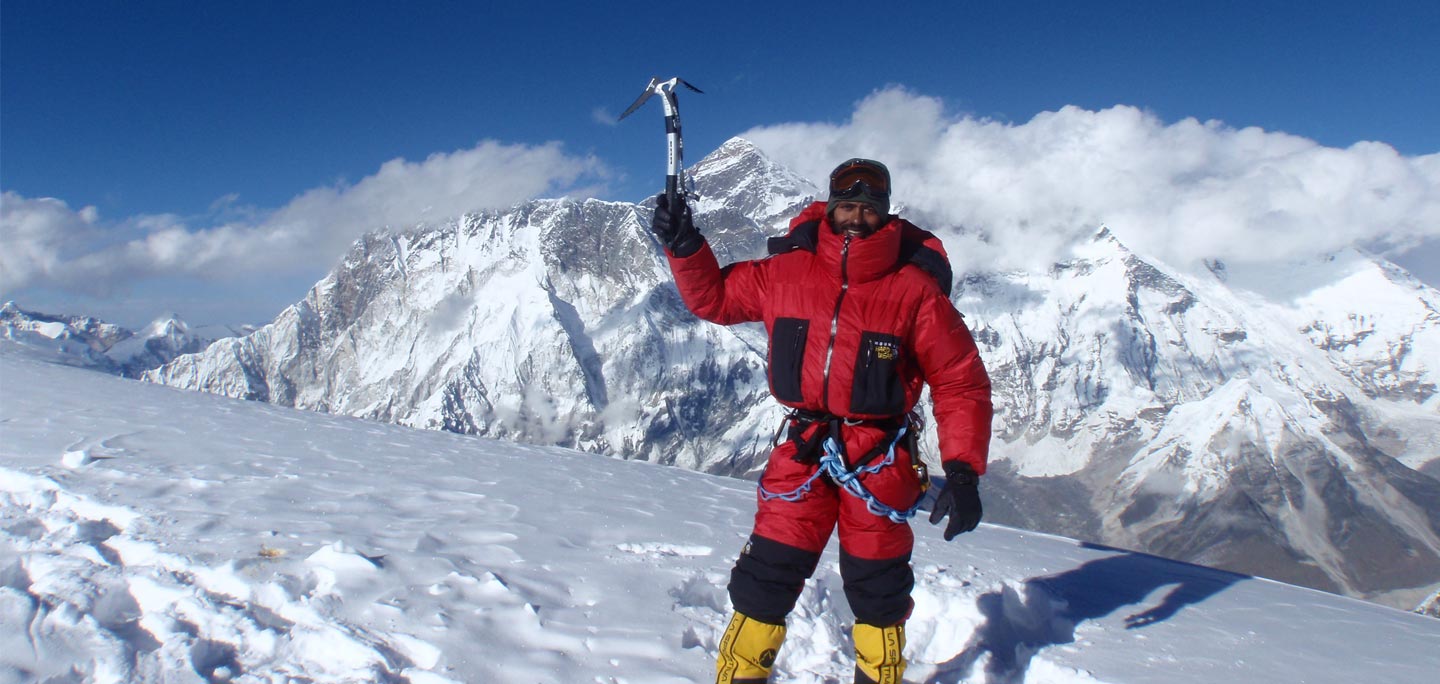
Mount Ama Dablam, a popular climbing peak in Nepal, is one of the many technical and challenging peaks in the Himalayas. The mountain requires advanced rope skills on rock, ice, and snow. Among its steep, mixed terrain is the Yellow Tower, which has a grade between 5 and 8, and the Mushroom Ridge. Due to Ama Dablam's high technical, steep elevation of 6,812 meters, it is not suitable for beginners as a first-time climb. Ama Dablam, located in Nepal, requires rock and ice climbing skills as well as previous high-altitude experience (over 6,000 meters). It is considered the "second" or "third" serious expedition for building skills necessary for climbing 8,000 meters.
To gain strength and experience before climbing the technical peak of 6,812m. of Ama Dablam in Nepal, climbers usually ascend smaller acclimatization peaks like Mount Island Peak (Imja Tse 6189m., or Mount Lobuche east 6119m., or Mount Pokalde Peak 5806 meters). They build endurance and confidence by conquering lower peaks first. Additionally, this strategy prepares them for Ama Dablam's technical challenges, which require advanced climbing skills and mountaineering experience. Before attempting the steeper and more challenging Ama Dablam, technical training and acclimatization are recommended.
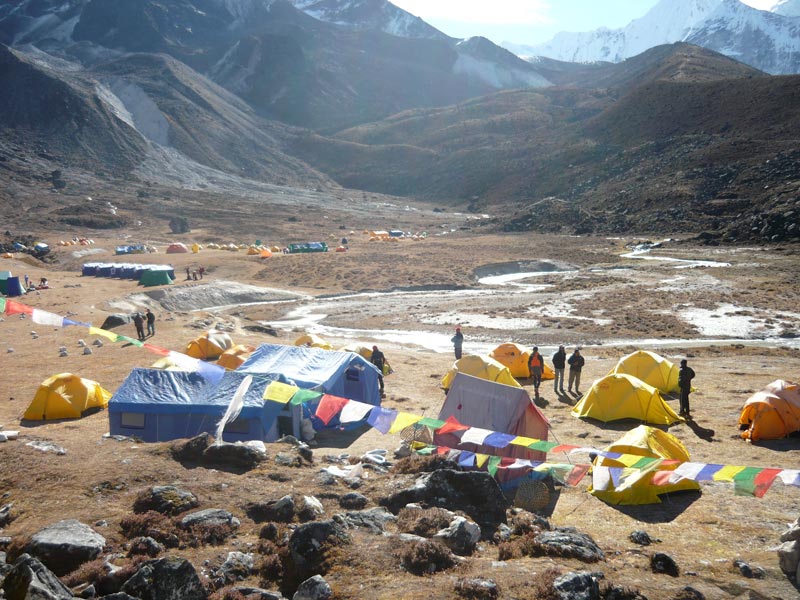
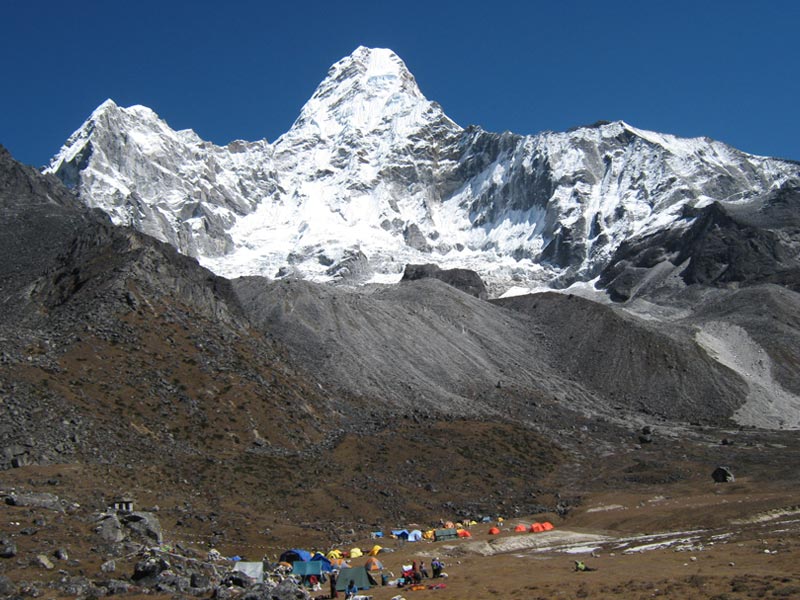
The Ama Dablam represents motherly protection in Sherpa tradition and is called "Mother's Necklace". "Ama" means mother, while "Dablam" is the name of a double pendant necklace worn by Sherpa women that contains images of gods. This mountain is adorned with long ridges that resemble a mother's protective arms, while its hanging glacier resembles a pendant. Ama Dablam Base Camp is situated at 4,600 meters/15,091 feet and provides climbers with a comfortable, sheltered place to prepare for technical ascents. Besides serving as a hub for kitchen staff, logistics, and gear, the building offers a panoramic view of the Southwest Ridge.
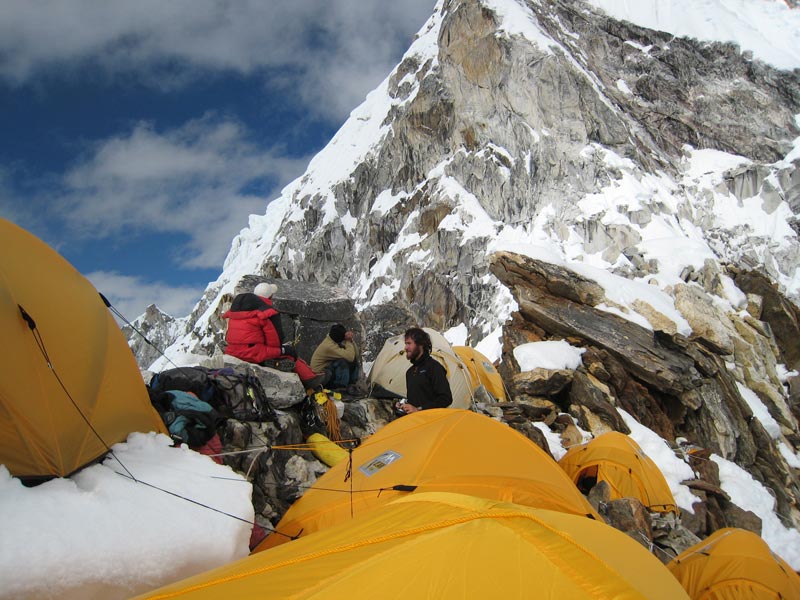
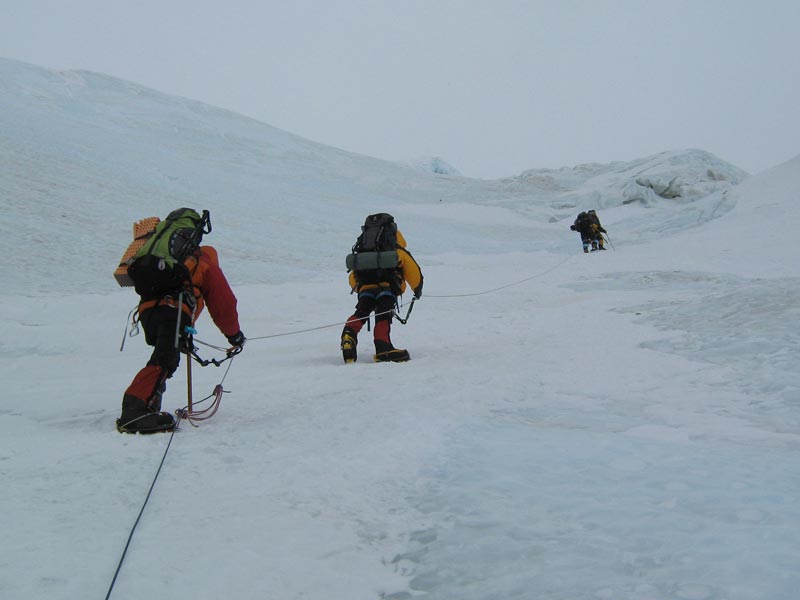
Ama Dablam climbing information: According to the normal route, Ama Dablam is normally climbed from its south-west ridge. Ama Dablam, 6812 meters, is a small snowcapped peak located in the Everest region that is usually chosen by beginners for their first climb. Mount Ama Dablam 6812 meters is typically climbed via this South-West ridge. Mountaineers typically pitch three high camps on the route, crossing difficult ice rocks and steep snow slopes. To reach the first camp, climbers must pass through the toughest and most difficult saddle ridges, then climb through rocky ground and boulders.
Ama Dablam Base camp to camp 1: There are steep, challenging terrains, including moraine, grassy slopes, and rocky boulders, that take 5–6 hours to ascend from Ama Dablam Base Camp, 4,600m, to Camp 1, 5,700m. The hike to a limited camp area is steep, strenuous, and often requires fixed ropes due to an exposed rocky ridge.
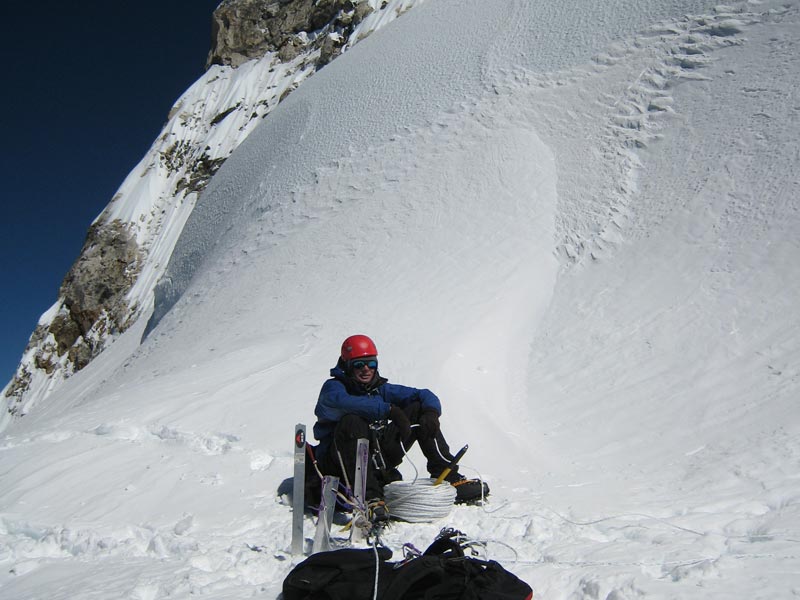
Camp 1 to Camp 2: From Ama Dablam Camp 1 to Camp 2 (the most technical, exposed, and physically challenging section of the expedition), there is a four-to-six-hour climb. The trek traverses' ridges of steep rock, granite slabs, and the vertical "Yellow Tower" to reach the cramped camp.
Camp 2 to camp 3: Taking 3-4 hours to climb, the climb from Camp 2 to Camp 3 is the most exposed and technical part of the expedition. The vertical "Grey Tower" (rock/ice mix) and the narrow, overhanging "Mushroom Ridge" must be navigated on snow and ice.
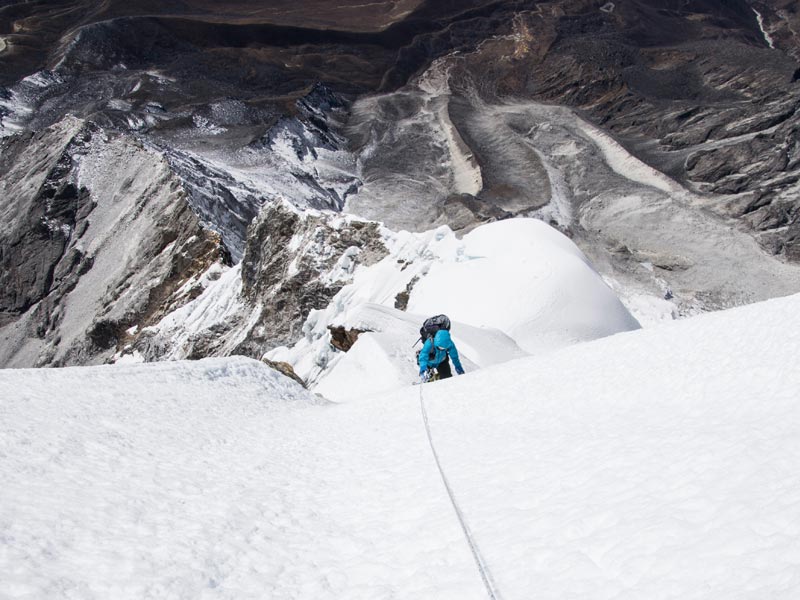
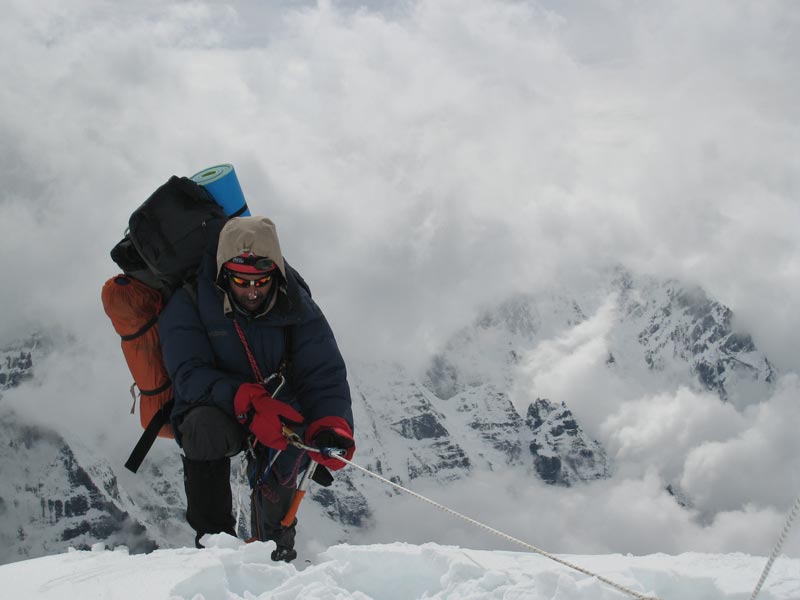
Camp 3 to Ama Dablam Summit: The climb from camp 3 to the summit of Ama Dablam is one of the most technical, steep 45° to 70° climbs on snow and ice you will encounter. This section requires climbers to navigate icy slopes, fixed ropes and the dark to avoid avalanches during the day.
Possible camp 2 to Ama Dablam Summit: The climb from Camp II (approx. 6,000m) to the 6,812m summit of Ama Dablam is the most technical and exposed section, which takes 3–5 hours of steep rock, ice, and snow, including the 5.5-rated "Yellow Tower" and "Mushroom Ridge" and hanging glacier. Often, you will stop at Camp III, as it requires high-altitude experience, strong technical skills, and fixed ropes.
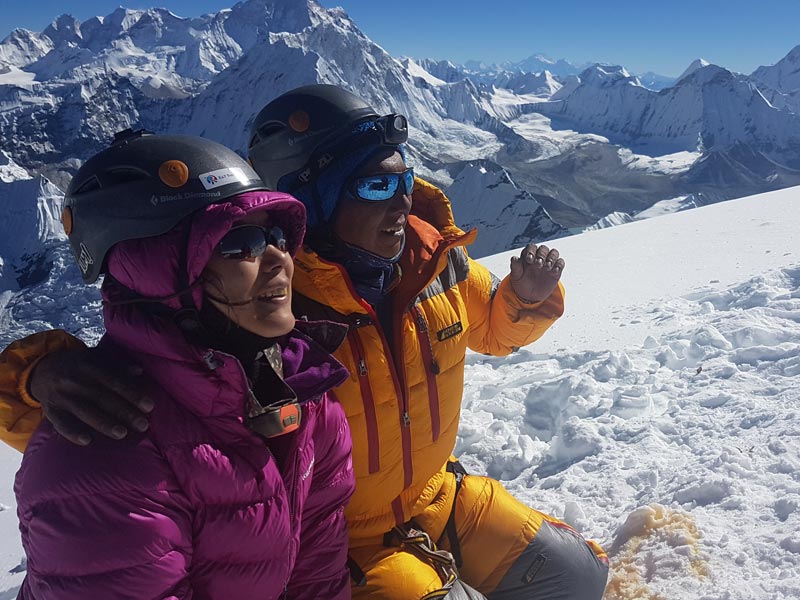
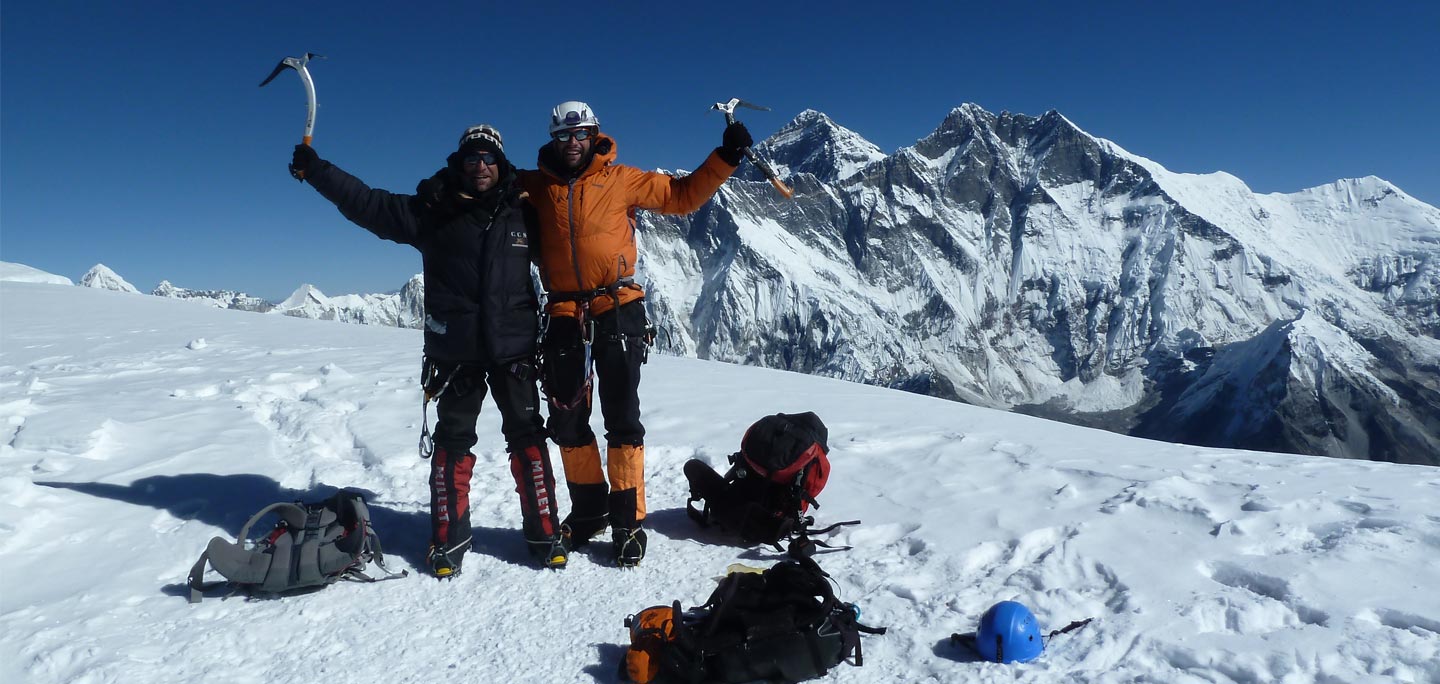
Summit from Ama Dablam: Having reached the summit in daylight, you can witness panoramic 360-degree views of Mount Everest, Mount Lhotse, and Mount Makalu, along with views of the Himalayas from a hanging glacier known as Ama Dallam. You can fly directly from Kathmandu to Lukla or drive from Kathmandu to Ramechap and fly from Ramechap to Lukla. It begins in Lukla and passes through Everest National Park, which is home to snow leopards and Himalayan Mountain goats (Thars). After climbing Island Peak, the trail returns to Chukkung, Dingboche, Pangboche, and climbs to Ama Dablam Base Camp after passing Thyanboche, Pangboche, and Chukkung.
Full board Ama Dablam Expedition: For roughly three times the price of Base Camp, the Full Board Service includes everything in Base Camp plus a personal Sherpa guide, high-altitude tents, food, and oxygen for summit push.
Key Differences:
Service Above Base Camp: The ascent is guided by a Sherpa guide, high camps (Camp I, II, III) are set up, and oxygen is provided for summit day.
Logistics & Personnel: The base camp service typically includes only a cook or assistant, whereas the full board service includes a cook or assistant, as well as a climbing Sherpa.
Safety & Support: Base Camp requires climbers to be self-sufficient or hire independent help for the climb. Full Board covers all high-altitude safety, including radio communications, oxygen for summit day and emergency rescues.
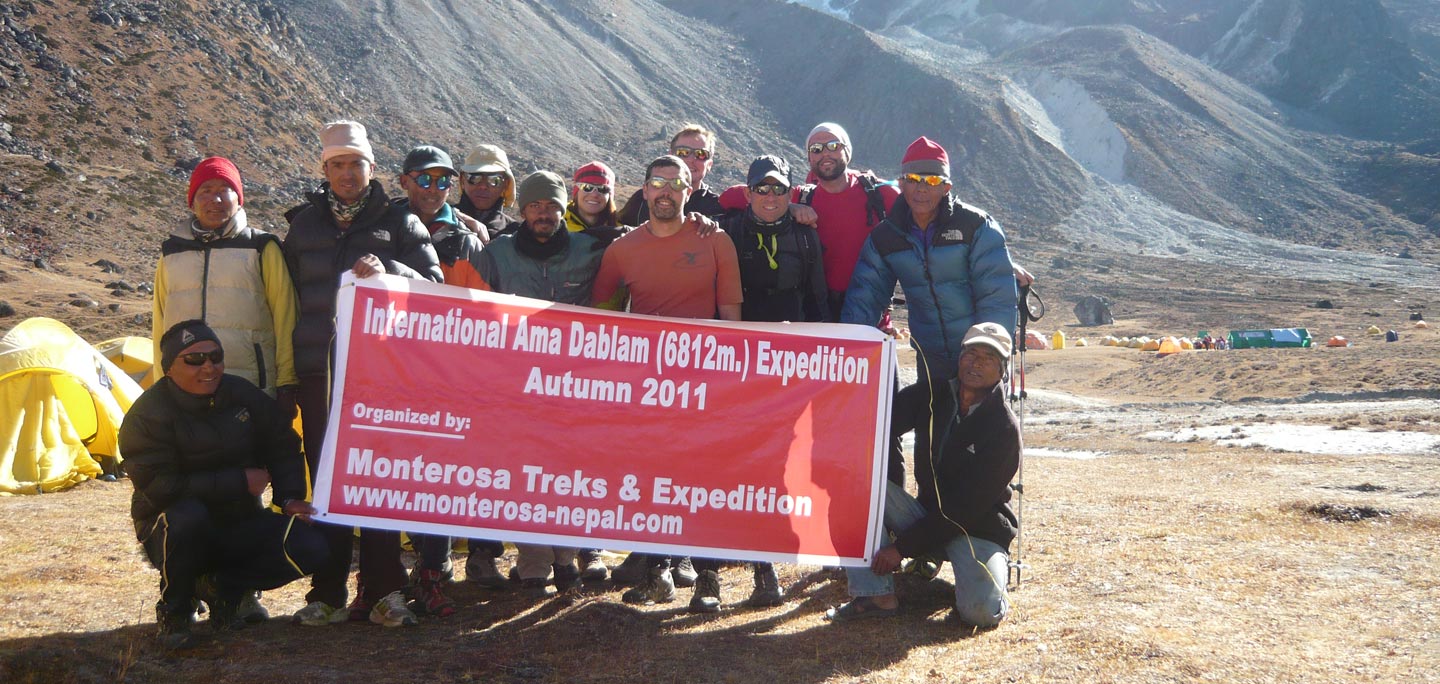
Ama Dablam Expedition Full Board Spring 2027 organized by Monterosa Treks & Expeditions
16 April 2027 Day 01: Arrival in Kathmandu & transfer hotel
17 April 2027 Day 02: Preparing - expedition in Kathmandu
18 April 2027 Day 03: Briefing & afternoon drive Ramechap
19 April 2027 Day 04: Fly to Lukla and trek-Phakding- lodge
20 April 2027 Day 05: Trek to Namche Bazaar 3440m.-lodge
21 April 2027 Day 06: Day hiking/acclimatization day - lodge
22 April 2027 Day 07: Trek to Thyanboche 3800m.,stay lodge
23 April 2027 Day 08: Trek Thyanboche to Dingboche lodge
24 April 2027 Day 09: Trek to Island Peak BC 4970m.-camp
25 April 2027 Day 10: Climb Island-high camp 5600m.-camp
26 April 2027 Day 11: Island 6189m summit-Chukkung- lodge
27 April 2027 Day 12: Trek to Ama Dablam BC 4600m.- camp
28 April-10 May 2027 Day 13-26: Climb Ama Dablam 6812m.
14 May 2027 Day 27: Trek BC to Namche bazaar hotel/ lodge
15 May 2027 Day 28: Trek Namche bazaar - Lukla and lodge
16 May 2027 Day 29: Fly Ramechap, drive-Kathmandu, hotel
17 May 2027 Day 30: All Transfer to airport for final departure
20 April 2027 Day 01: Arrival in Kathmandu & transfer hotel
21 April 2027 Day 02: Preparing - expedition in Kathmandu
22 April 2027 Day 03: Briefing & afternoon drive Ramechap
23 April 2027 Day 04: Fly to Lukla and trek-Phakding- lodge
24 April 2027 Day 05: Trek to Namche Bazaar 3440m.-lodge
25 April 202 Day 06: Day hiking/acclimatization day - lodge
26 April 2027 Day 07: Trek to Thyanboche 3800m. Stay lodge
27 April 2027 Day 08: Trek to Ama Dablam BC 4600m.-camp
28 April-10 May 2027 Day 09-22: Climb Ama Dablam 6812m.
11 May 2027 Day 23: Trek BC to Namche bazaar hotel/ lodge
12 May 2027 Day 24: Trek Namche bazaar - Lukla and lodge
13 May 2027 Day 25: Fly Ramechap, drive-Kathmandu, hotel
14 May 2027 Day 26: All Transfer to airport for final departure
Expedition Cost:(Group joining basis )
Per Person USD 6,500 (Island Peak + Ama Dablam)
Per person USD 6,000 (Only Ama Dablam)